
From concept to production: automotive HMI design built on 10+ years of real vehicle program experience.

From concept to production: automotive HMI design built on 10+ years of real vehicle program experience.

Modern vehicles are digital, but outdated or poor HMIs cause distraction, frustration, and brand risk.
With over 10 years of experience dealing with these challenges in automotive HMI development, we partner with leading OEMs to deliver intuitive and well-integrated in-vehicle interfaces. Our approach combines user-centered design with strong engineering practices, while closely following ISO 26262 guidelines and Automotive SPICE (ASPICE) processes to deliver safe automotive software products.

We can fully develop a digital cockpit complete with steering-based controls, voice recognition, navigation features, digital instrument clusters, HUDs,
and more.

We can create and update customisable digital instrument clusters that can be operated via touch controls, the joystick, a mobile app, or the driver’s voice.

Bamboo Apps can deliver efficient in-car infotainment systems that support a variety of apps to make the driving experience more enjoyable.

Bamboo Apps can develop software for heads-up displays that minimises distraction by showcasing key data directly in the driver’s line of view for safety purposes.

We can create high-quality solutions for rear seat displays that are perfect for supplying vehicle information and entertainment to the passengers.

We can build IVI apps from scratch or adapt your existing solutions for safe use in vehicles. We create apps for Android Automotive OS or OEM’s proprietary system, all following Google Material Design principles and Apple Human Interface Guidelines.

Nowadays people are getting used to high-quality digital products elsewhere, including vehicles; thus, customers perceive digital experience as vehicle quality.
It allows OEMs to charge more for the same hardware and enable trim-level differentiation without hardware changes. Technically it also makes it possible to decrease development costs and time-to-market for new features, e.g., by using OTA.
Moreover, a good HMI reduces driver distraction, misuse of ADAS features, and confusion in autonomous systems, which is especially valuable for mobility companies.
This way, HMI can bring stronger brand perception, premium positioning, better review scores, and increased loyalty.

|
Chief Technology Officer
Bamboo Apps presented the concept suite of connected car control apps and the futuristic HMI design for Rinspeed’s new concept vehicle. It was presented at CES 2020 featuring interface designs from our team.

An advanced IVO application for mobile devices and infotainment systems. Bamboo Apps first presented the software at GITEX 2022, UAE, Dubai.

Bamboo Apps delivered nine design concepts and selected a primary direction, refining the chosen design and working on additional screens. The result was later approved for mass production.
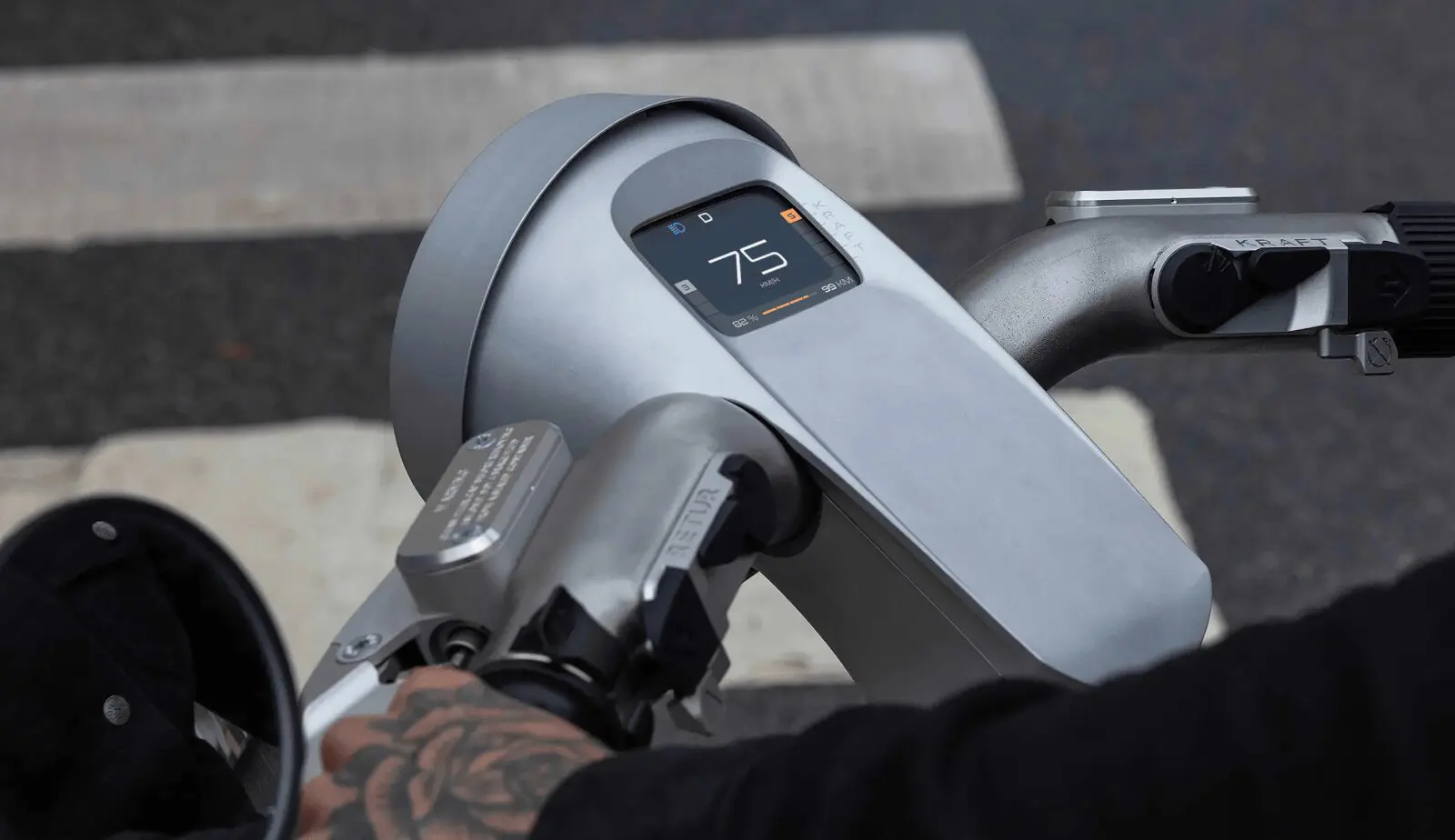
Bamboo Apps designed an instrument cluster and an IVI system for Reload Motors’ unique series of commercial vans powered by green energy.
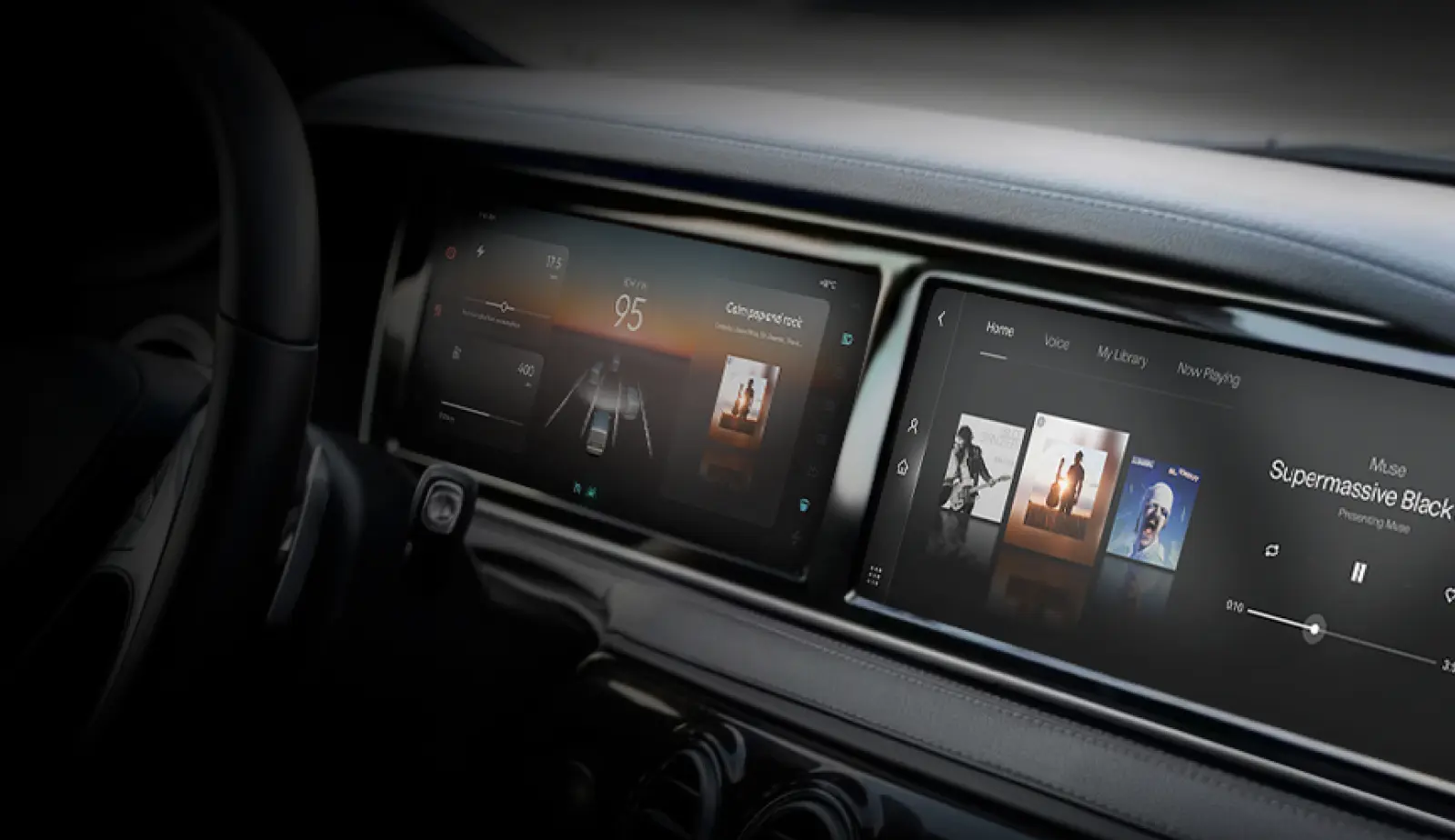
A technical proof of concept (PoC) for a restricted, policy-driven in-car infotainment system.

Vehicle interfaces operate in a dynamic environment where driver attention is limited and safety is critical. To guarantee information is delivered clearly and without distraction we always analyse real driving scenarios, cognitive load, and interaction timing. When working with platforms like Android Automotive OS, we also account for platform-specific safety constraints to make sure the application is approved by the Google team.
Modern cockpits combine multiple interaction channels: touch, voice, physical controls, clusters, and HUDs. Special attention is paid to consistent interaction patterns across displays, so there are clear information hierarchy, optimised touch targets, and seamless transitions between cluster, center display, and HUD.
To create interfaces that perform reliably in real driving situations, we validate HMIs through our in-house emulators, built on Polestar, Stapp Automotive, and TomTom systems. This way we can catch issues early before deployment in real vehicles.
We build modular and scalable HMI architectures that support new services, updates, and easy feature expansion. These solutions are focused on user experience and consider all relevant regulations to allow series implementation (ISO2575, signals placement according to ASIL, etc).

Since 2015, Bamboo Apps has been working with the Jaguar Land Rover team, Škoda, Mitsubishi Electric, Zurich Insurance, Gentherm, and other big names on their automotive software.

10 years of industry experience and 50+ ASPICE-trained experts on board. Automotive SPICE is a framework used to assess an ability of an automotive software team to deliver products reliably and effectively.

We boast a team of UX experts, nominated by the UX Design Awards for excellence in product design.

“We were very happy with the cost-effectiveness of the solution suggested by Bamboo Apps. I must say we were also very satisfied with their work, their flexibility, and the level of their expertise.”

“We had the opportunity to work with Bamboo Apps on an innovation project. Their team was creative, responsive, and delivered an awesome solution in a very short time period. They executed our ideas and provided ideas of their own and we ended up with a great result. I would welcome an opportunity to collaborate with Bamboo Apps again.”

“I am satisfied with the Bamboo Apps team’s work and attention to detail. Also, I appreciate going the extra mile to achieve the requirements in a timely manner.”

“As a creative company, we look for creativity, chemistry, and an ability to do outstanding work. We found that at Bamboo Apps and our partnership with them started in 2018, and it’s ongoing. I’m happy with their project management. They also complete their work in a reasonable amount of time.”
We follow ISO 26262 standards, including ASIL-based safety requirements, and align our processes with ASPICE for automotive projects. Our teams understand OEM and Tier-1 compliance expectations and support validation and review throughout the development lifecycle. During design, we apply checklists, design reviews, and validation steps to ensure layouts, controls, alerts, and user flows meet regulatory standards. Before release, we conduct final compliance and safety reviews to confirm the HMI performs correctly in both normal and critical scenarios.
We design for real-world conditions such as gloves, vibration, low visibility, and limited user attention. Interfaces may use high contrast, large interaction elements, and simplified navigation to guarantee reliability under stress.
Get in touch to discuss your needs or request a quote.

