
At Bamboo Apps, we help automotive companies design instrument clusters and develop software for any type of vehicle, from passenger cars to futuristic motorcycles.
Our instrument cluster development services
Analog instruments no longer keep up with modern vehicle programs. For any modern driver, connected displays, HUDs, EV-focused data, smooth animations, driver assistance alerts, and over-the-air updates are a given.
According to the Digital Instrument Clusters Market Growth – Trends & Forecast 2026 to 2036 report by Future Market Insights, the global digital instrument clusters market is valued at $5.32 billion in 2026 – and by 2036 the number is expected to grow to $33.23 billion. In this expanding industry, OEM teams face shorter release cycles and stricter safety compliance requirements. Moreover, electric vehicle instrument cluster design demands specific UI needs, and the transition towards software-defined vehicles (SDVs) adds another layer of complexity.
Yet, many OEMs and Tier-1 suppliers already know their digital cockpit strategy. The real challenge comes later, which is how to find an engineering partner that can turn concepts into a production-ready automotive digital instrument cluster.
Our teams build digital interfaces that respect vehicle architecture, hardware limits, brand requirements, and homologation targets. We support automotive programs at every development stage.
Every second on the road, drivers look at the instrument cluster. A poor layout pulls attention away from driving, while confusing animations slow reaction time. As a result, a weak visual hierarchy creates frustration behind the wheel.
To solve this challenge, Bamboo Apps designs instrument cluster interfaces for fast perception and comfortable driving in real traffic. Our instrument cluster design services cover the following areas:
- Information architecture for driving scenarios
- Visual concepts adapted for brand identity
- Day and night mode designs
- Motion design for transitions, warnings, and status changes
- Widgets for speedometer, tachometer, ADAS, navigation, and EVs
- UX validation for readability and driver focus
- HMI assets ready for embedded development environments.
We develop cluster HMIs using Qt/QML and Kanzi. Our focus stays on responsive graphics, smooth animations, fast startup times, and stable runtime behavior. Our engineers integrate middleware, vehicle data pipelines, diagnostic services, connectivity modules, over-the-air update components, and functional safety requirements.
Our projects often run on Linux or QNX. Bamboo Apps’ areas of responsibility include:
- handling platform adaptation
- collaborating on board support package (BSP) development
- integrating third-party components
- managing hardware communication
- tuning performance across varied SoCs and display configurations.
Many automotive programs must meet strict timing targets while delivering demanding visuals. We draw on experience from production-grade automotive HMIs and, consequently, help clients move from concept validation to series production with fewer delivery risks.
An automotive instrument cluster does not work as a standalone product. Drivers expect instant access to vehicle data, as well as ADAS alerts. They also require navigation prompts and diagnostics – and remote services, too. Bamboo Apps connects cluster software to CAN bus and LIN networks, telematics platforms, FOTA update modules, and onboard control units.
Our team handles communication across multiple vehicle systems. This way, OEMs and Tier-1 suppliers minimise integration issues during development stages. We support new cockpit programs and modernisation projects built on existing vehicle architectures.
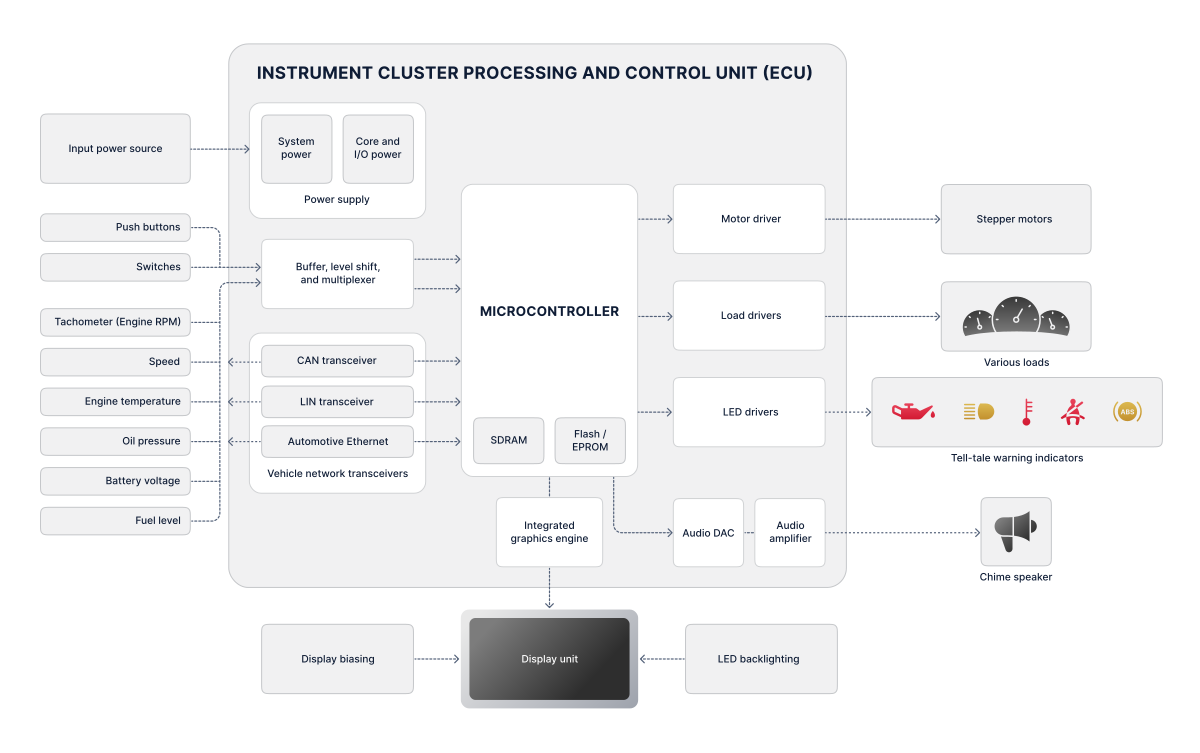
Key instrument panel features

Real-time vehicle data display
The instrument panel shows live vehicle data – speed, RPM, fuel level, and battery status – directly from the vehicle’s Electronic Control Units (ECUs).

Configurable display layouts
Drivers can choose different display layouts based on driving conditions, such as a navigation-focused view or a performance-oriented screen.

ADAS and telltale integration
Safety systems feed directly into the cluster. Warnings and ADAS alerts appear right alongside driving information.

Bluetooth connectivity
Bluetooth connects mobile devices for calls, media control, and selected in-vehicle functions without leaving the driving interface. This applies only for two-wheelers.

Voice assistant UI feedback
An onboard AI voice assistant gives drivers instant, glanceable visual cues. They can follow voice-driven navigation and infotainment tasks without looking away from the road.

FOTA updates
Software updates arrive remotely over the air to keep cluster functionality current without service appointments.
Work with automotive HMI experts who know digital instrument cluster software
Collaborate with Bamboo Apps, a trusted development partner of Jaguar Land Rover, Škoda, Mitsubishi Electric, and other big names.
Check our HMI projects
We know how to make a digital instrument cluster – and we let our projects speak for themselves.
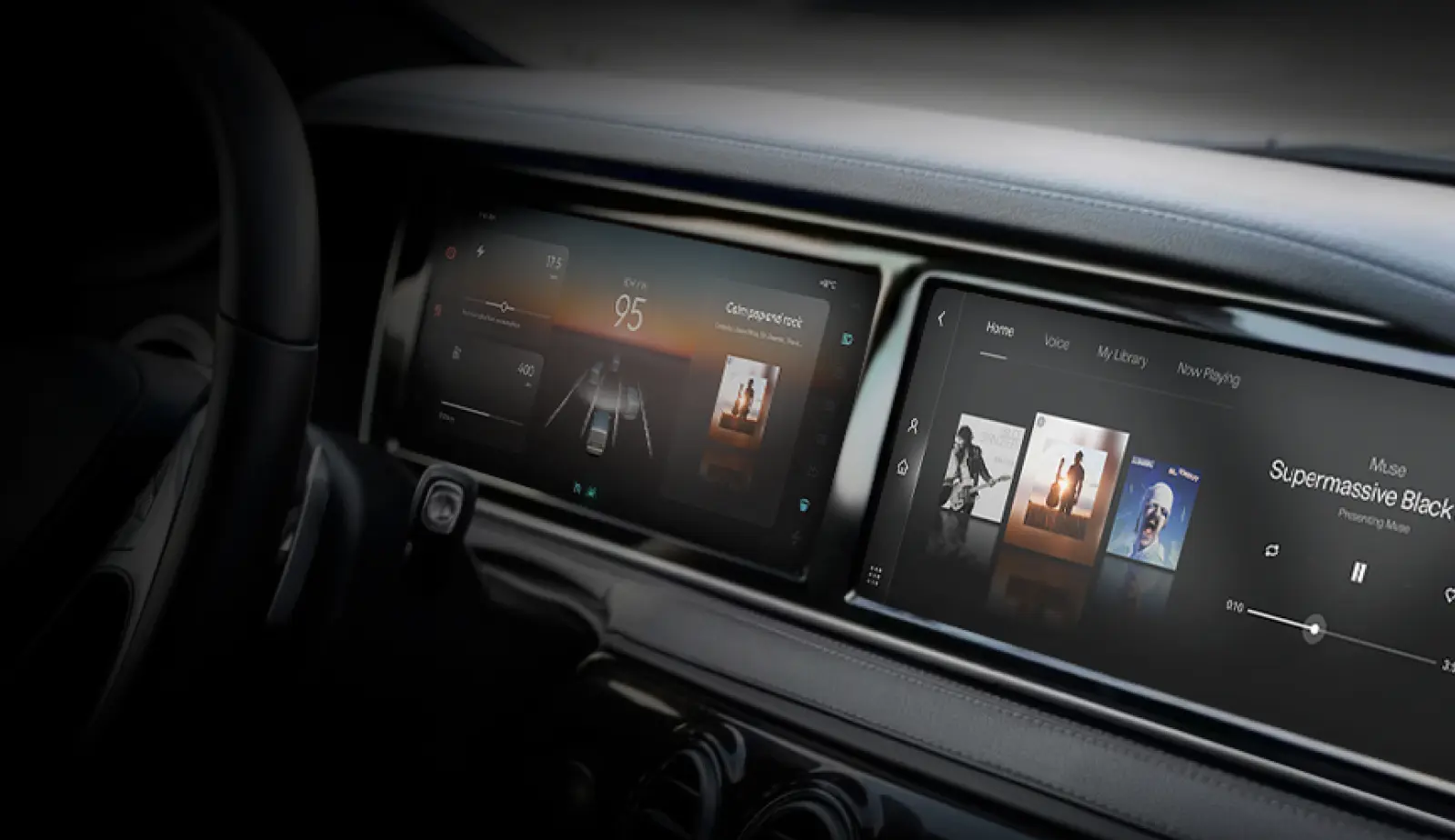
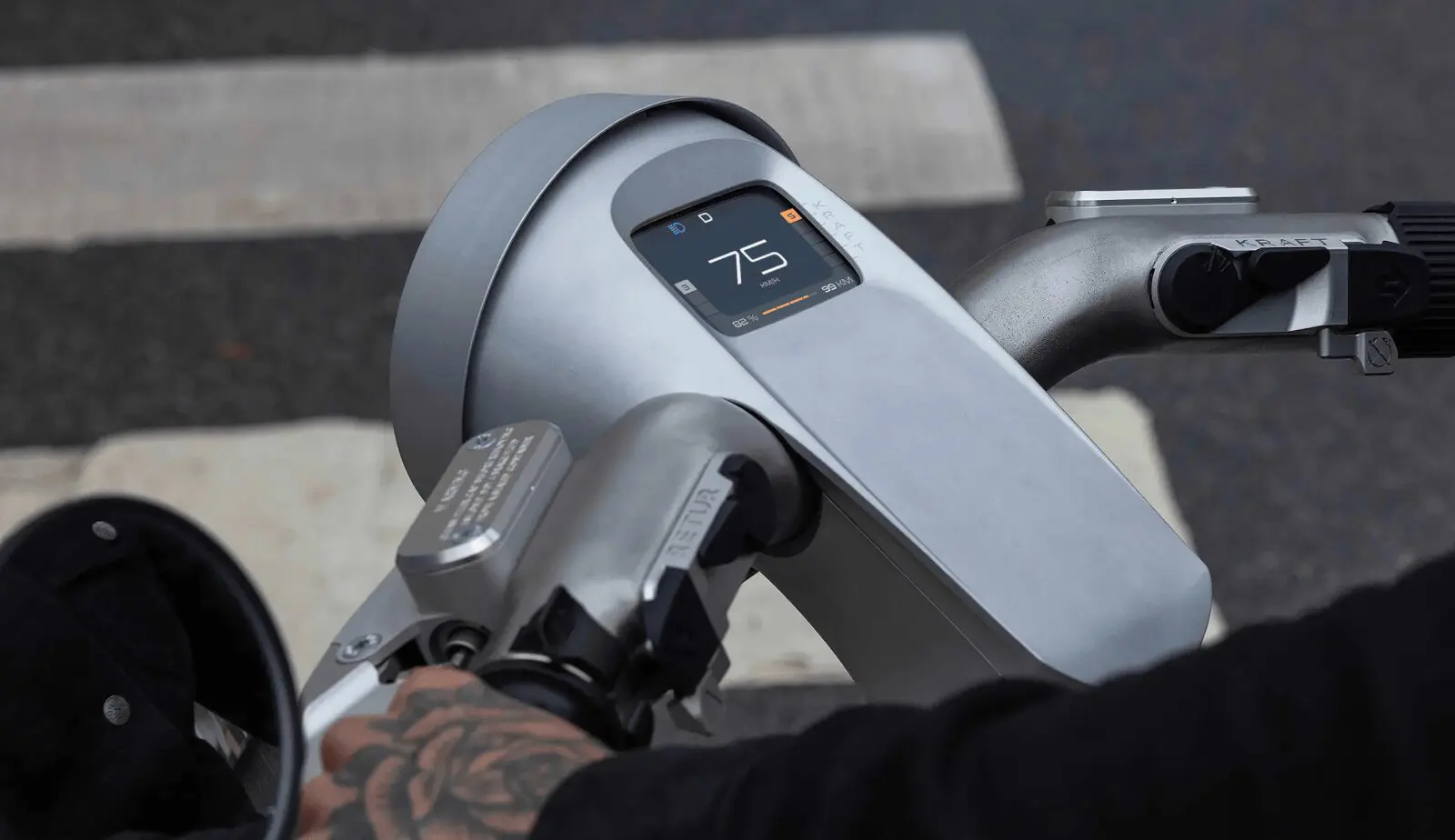

How we design automotive instrument clusters
Automotive instrument clusters must balance many factors, like real-time vehicle data or safety expectations. At Bamboo Apps, we work alongside your team to design cluster systems that fit vehicle architecture and relevant production demands.
We start by studying vehicle architecture and hardware constraints, then review driver workflows alongside compliance requirements.
Our design experts create cluster screens around driving context and readability and define input logic for controls.
Once the design is ready, Bamboo Apps’ engineering team steps in and builds software for real-time rendering and vehicle communication. Next, they implement system behaviour rules.
At this stage, we run meticulous tests for performance and safety scenarios across target hardware and address edge cases.
We support integration with vehicle systems and assist during launch activities at production sites, if needed.
Our digital instrument cluster software stack
HMI frameworks
- QT
- Kanzi
Languages
- C
- C#
- C++
Operating systems
- Linux
- QNX
Why we stand out in automotive digital instrument cluster development

Trusted by OEMs and Tier-1 suppliers
Companies like yours come to us when internal teams need an experienced digital instrument cluster software partner who speaks the same technical language and can work within established automotive program structures.

Minimal distraction design
We care about drivers and make every design decision based on their attention. Our team structures every automotive digital dashboard around fast recognition of speed, warnings, and vehicle state without visual noise. Our HMI approach removes unnecessary visual clutter and keeps interaction paths short.

HMI ready for series implementation
Bamboo Apps builds HMI systems for actual vehicle platforms, not just prototypes. Each solution we deliver respects ECU limits, works with automotive middleware, and handles integration across CAN and LIN environments.
Frequently asked questions
What operating systems do you use for instrument cluster development?
Bamboo Apps supports production-grade environments common in OEM programmes worldwide. We develop instrument clusters for automotive ECUs using QNX Neutrino RTOS, AUTOSAR-based platforms, and various Linux distributions. The choice of platform depends on safety requirements and compatibility with the supplier’s software stack.
How do you handle ISO 26262 functional safety requirements?
To create an ISO 26262-compliant custom digital instrument cluster, we follow a step-by-step path. First, we review hazards. Then, we define ASIL targets – e.g., ASIL-B for certain display or warning functions. Next, we translate them into safety requirements for the cluster. After that, we build the architecture, verify the software, and collect evidence for assessments with your safety team.
Can the cluster be integrated with ADAS and telematics systems?
We connect instrument clusters to ADAS data pipelines and telematics backends, so drivers see alerts and vehicle status in real time. Our engineers work with OEM and Tier‑1 architecture teams to line up service interfaces across domains. Safety and data consistency stay central across the stack.
What HMI tools and graphics frameworks do you work with?
Bamboo Apps works with automotive-grade HMI tools used across globally recognised digital cockpit programs. Our teams design and develop instrument clusters with Qt/QML, Kanzi, Android Automotive OS, Linux, and QNX. We also work with proprietary OEM platforms.
Can you develop clusters for both two-wheelers and four-wheelers?
Yes, Bamboo Apps creates automotive instrument cluster design for all types of transport. This includes motorcycles, scooters, passenger cars, commercial vehicles, and marine transport. Our team can adjust layouts or HMI logic to fit each vehicle type. We pay attention to screen size, safety requirements, and driving scenarios.
How long does instrument cluster development typically take?
Most instrument cluster projects take six to eighteen months. Factors that influence the timeline include the following:
- feature scope
- hardware selection
- safety requirements
- HMI complexity
- vehicle integration
- validation volume.
OEMs can shorten production time if they partner with vendors like Bamboo Apps who already understand automotive workflows and safety standards, as well as certification requirements.
Explore next-gen automotive instrument cluster development
Work with Bamboo Apps to create a driver-centric HMI solution.

Natalia Minayeva
Strategic Partnerships
Executive
Executive