
We engineer production-ready IVI systems, following safety and security regulations and best delivery practices set by ASPICE.

We engineer production-ready IVI systems, following safety and security regulations and best delivery practices set by ASPICE.
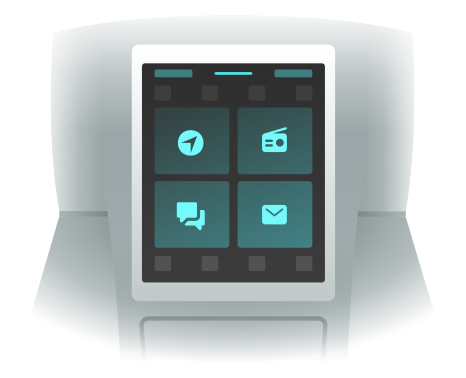
The infotainment system is one of the car units drivers interact with most, and it increasingly shapes their impression about the model. When the interface is slow, cluttered or hard to use, this issue soon shows up in reviews or dealer support tickets. Thus, according to J.D. Power’s study, in 2024, half of the top problems reported by new-car owners were related to infotainment systems. At the same time, the study by McKinsey showed that 37–54% of surveyed buyers would consider changing the brand for having a better in-car digital experience.
Bamboo Apps has built automotive software for vehicle manufacturers since 2015. Our engineers and designers develop IVI systems that hold up in production, pass safety and distraction validation, and, most importantly, deliver a great driver experience. We cover the full infotainment software stack, from the operating system up to the apps drivers use every day. Our HMI portfolio spans interfaces for passenger, commercial, two-wheeled, and water vehicles.
For modern OEMs aiming to deliver next-gen in-car experience, we conceptualise integrated cockpits that feel like one. The instrument cluster, the infotainment screen, and the HUD share a single design language, so the cabin reads as a unified system rather than several displays from different suppliers.
We can handle the wide, curved, or pillar-to-pillar interior layouts, split driver and passenger zones, and add the premium-level depth and personalisation.
With IVI software, we can work full cycle, when we set the architecture and OS strategy (e.g., Android Automotive, Linux, AGL, QNX), design the HMI, and build it. Every release can be tested and validated against real driving scenarios and platform requirements on our in-house emulators, so the software reaches production already hardened.
We bring up Android Automotive at the software level, customising the framework, HALs, and VHAL so the system reads and acts on vehicle signals. Plus, we handle GAS provisioning along with the Google approval it requires. When a project needs it, we can build AGL images or integrate QNX for the safety-isolated side of the cockpit, and connect the middleware that links infotainment to the rest of the car.
We develop the apps that make up the in-car experience: media, navigation, phone and messaging, climate, EV and charging, settings, onboarding, voice, and others. The harder part is to design them for low distraction and to take them through the platform’s safety review. IVI apps can be built from scratch, or we can adapt existing mobile apps for the road, so they feel native to the car.
In 2023–2025, poor phone connection was identified as one of the most common complaints about IVIs (J.D.Power 2026 Vehicle Dependability Study), and our team treats it as core engineering rather than a checkbox. We can integrate Apple CarPlay and Android Auto so they connect reliably. Additionally, we can help you decide where projection is the right call and where a fully embedded experience serves your brand better.
We use emulators from Polestar, Snapp Automotive, and TomTom to run infotainment software against realistic conditions from the early stage of the project. That keeps iteration fast, cuts reliance on scarce target hardware, and means fewer costly issues late in the program.

We integrate the full range of in-car media: radio, video and audio streaming services like Spotify, and your own content apps.

We build the navigation experience into the head unit and bring in the map providers you choose, from third-party SDKs to HD maps.

We build AI-powered voice assistants following a preferred personality and command set, so drivers can control the vehicle system and get answers without taking their hands off the wheel.

We build secure OTA pipelines so you can fix issues and ship new features long after the vehicle leaves the factory.
Whether it is a concept, prototype or a solution for series implementation, we will help you scope the work and map out the next step.
The project covered a combined instrument cluster and infotainment system development. We organised vehicle data into easy-to-read screens and aligned them with Reload’s brand style guidelines. Apart from common capabilities, the HMI offered blockchain-based driver IDs with a feature store, automatic accident detection, and in-app roadside assistance.
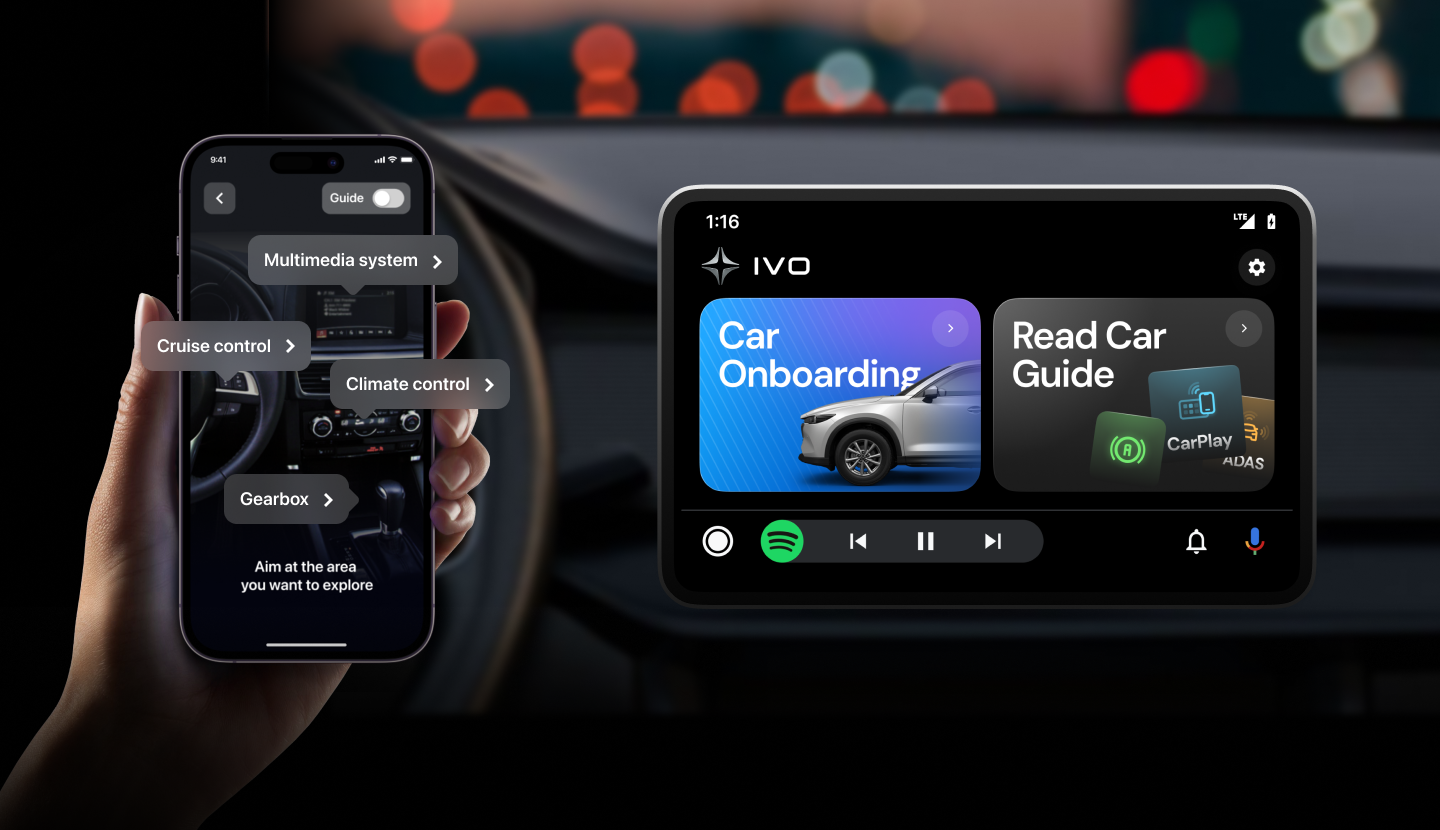
IVO is an AR- and ML-powered onboarding app for phones and infotainment systems (AAOS and proprietary). Its integrated context-aware voice assistant explains features as they become useful on a trip, from CarPlay setup to blind-spot monitoring.
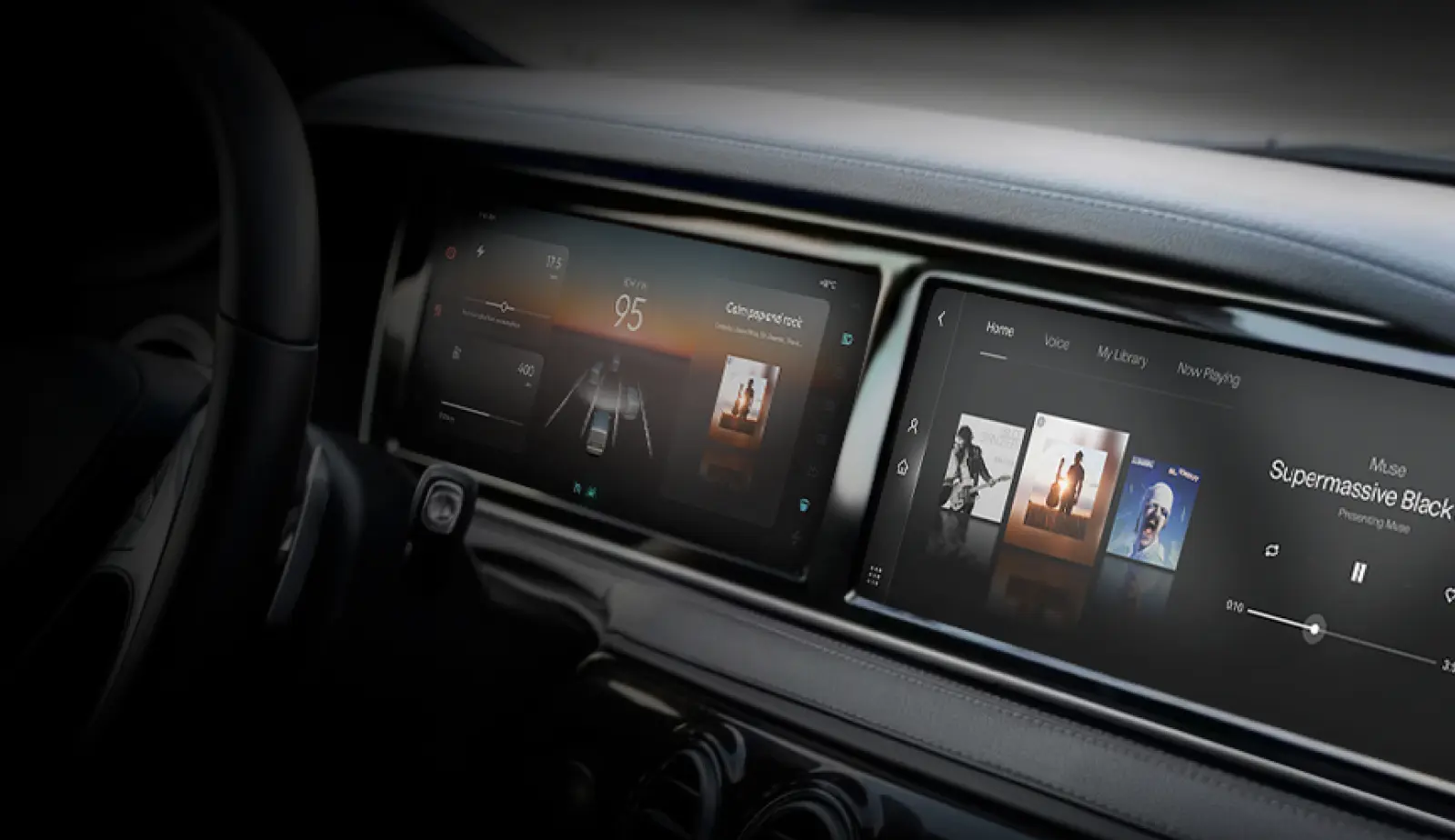
We developed a digital cockpit for Rinspeed’s autonomous microSNAP, a Level 5 last-mile delivery shuttle launched at CES 2020. The Bamboo Apps’ work included a 49-inch coast-to-coast HMI for a shared passengers’ experience and a connected in-car remote-access app.

A US company serving the Orthodox Jewish community needed to check whether a custom launcher could replace the stock Android Automotive interface, block specific apps, and enforce network-level content filtering. We built the launcher within two weeks and tested the device-policy controls as a proof of concept.


For over a decade, we have worked with Jaguar Land Rover, Škoda, Mitsubishi Electric, Gentherm, and Rinspeed, among others, on production and concept automotive software.

The team of Bamboo Apps is familiar with the practices and process requirements set by Automotive SPICE, so that we can deliver reliably and follow it from the first sprint.

Our team was nominated by the UX Design Awards for their work on automotive solutions, so the systems we develop are judged on user experience, not only engineering.
An IVI system is the software and screen that handle media, navigation, communication, climate, and connected services from the vehicle’s head unit. It runs on an automotive operating system and connects to the rest of the car to show the right information at the right time.
An infotainment system which is ready for series implementation, with OS integration, an apps suite, validation, and compliance check, usually requires 9 to 18 months or more. The main things to decide on are the operating system, whether you use Google services, the number of apps and markets, and the safety level you need to comply with.
There is no flat price at OEM scale due to significant differences in client requirements and used hardware/OS. Cost is shaped by the scope, OS licensing (Google services or QNX versus open AGL), apps, localisation, integration effort, cybersecurity and other compliance work, and the need for ongoing OTA support. At Bamboo Apps, we approach every project individually and can work turnkey or as a subsystem partner.
Android Automotive gets you to market fastest, with a large app ecosystem and optional Google services, but your system will get high dependence on Google as a vendor. AGL gives you full control over branding, there is no per-unit licensing, but, for sure, you will require more engineering effort. QNX is a real-time OS certified to ISO 26262 ASIL-D. In recent car models, it more and more often works alongside AAOS.
If you are not sure about the OS choice, contact us at Bamboo Apps, and we help you weigh the system options against your UX goals, budget, and compliance requirements.
Not necessarily. GAS gives you Google Maps, Assistant and the Play Store out of the box, which speeds up development and feels familiar to drivers. The trade-offs are the licensing terms and less control over the experience. Many OEMs integrate Android Automotive without GAS and build their own services on top.
For almost every case, customisation wins. If you integrate Android Automotive or AGL, this would save you years of work, and these both options are already proven in modern production vehicles. Building from scratch only makes sense in rare cases with very specific constraints. Request a consultation at our team, and we will discuss which path fits your project.
ISO 26262 for functional safety, ISO/SAE 21434 for cybersecurity, and Automotive SPICE for team’s dev process maturity – these are the must as default. As for market approval, UNECE R155 (cybersecurity management) and R156 (software update management) may apply, along with data-privacy rules for connected features.
Every update is signed and encrypted, so the vehicle can validate that it came from the OEM/supplier and was not tampered with before it is installed. If the update fails, the system rolls back to the last working version.
Yes. We can adapt apps for safe in-car use, reworking the interface for driving conditions, following distraction rules, and porting apps to Android Automotive or your proprietary system. It’s usually faster than rebuilding, still, not any kind of app can be immediately approved by Google – sometimes, there is the need in reviewing the app’s features.
Tell us about your project and we will come back with a technical approach.

