
Work with Bamboo Apps to create a fleet platform built around your vehicles and data flows. We provide custom fleet management application development to connect sensors and back-office systems into a cohesive, easy-to-use product.

Work with Bamboo Apps to create a fleet platform built around your vehicles and data flows. We provide custom fleet management application development to connect sensors and back-office systems into a cohesive, easy-to-use product.
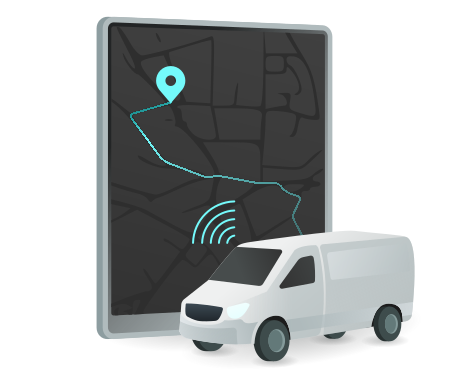
Demand for digital fleet tools continues to rise. According to recent market reports, the global fleet management software market is projected to surpass USD 51.4 billion within the next few years. The industry is getting influenced by:
At the same time, fleet operators still face pressure to cut costs while keeping vehicles on the road and customers satisfied. Fuel prices fluctuate, regulations tighten, and driver shortages slow down operations.
Bamboo Apps is a fleet management app development company that offers custom solutions to tackle your most complex fleet hurdles. Our team covers the full product landscape, from driver-facing apps to complex dispatch platforms.
A web-based fleet platform gives your team a single place to manage vehicles, drivers, routes, or operational data in real time. At Bamboo Apps, we build browser-accessible systems for dispatch workflows. These systems also handle:
With a custom fleet management web app, you get complete visibility across regions and can track performance and costs from one interface. Over time, your application can easily add new modules or analytics.
While on the road, drivers and field operators need reliable tools. We develop mobile apps that support daily tasks without getting in the way. Route guidance, job updates, vehicle checks, or issue reporting – each feature helps drivers stay informed and in control throughout the workday.
Real-time data moves effortlessly between drivers and dispatch teams. The app shows only what matters at each moment (e.g., next stops or alerts), so drivers can act quickly. Offline access keeps work moving in low-signal areas, and automatic sync updates the system once a connection returns.
Telematics and IoT are an essential part of custom fleet management app development. To make them work for you, Bamboo Apps brings data from onboard devices, sensors, and third-party telematics platforms into one place. We can build a system that captures accurate information from a variety of sources, like GPS trackers and driver behaviour monitoring tools.
We also design integrations that fit your existing hardware and vendors. Our team creates stable data pipelines and reliable APIs to keep your platform in sync with field operations.
At Bamboo Apps, we implement AI-powered features that help teams plan routes more accurately and forecast demand from both historical and real-time data – as well as spot irregular patterns in vehicle usage or driver behaviour.
For our fleet management app development services, we use:

Fleet management applications may seem quite straightforward in terms of functionality, but they can bring significant technical challenges that need to be addressed.
Such apps are never standalone – they are part of a distributed client-server platform where all components must provide high availability and scalability.
Besides, for fleet management applications, we need to consider:
Frankly, I didn’t even spend much time recalling all these challenges, because in Bamboo Apps’ projects, we face them regularly and have solid hands-on experience resolving them for our clients.

|
Chief Technology Officer

Real-time vehicle tracking gives you full visibility into fleet location and status. Dispatchers spot unauthorized use or route deviations and respond immediately.

With smart routing, you can plot efficient paths based on traffic and delivery priorities. Teams cut travel time and lower mileage, as well as meet delivery deadlines.

Fuel tracking tools measure consumption across vehicles and flag anomalies. Using this feature, you can control fuel costs and find inefficient driving patterns.

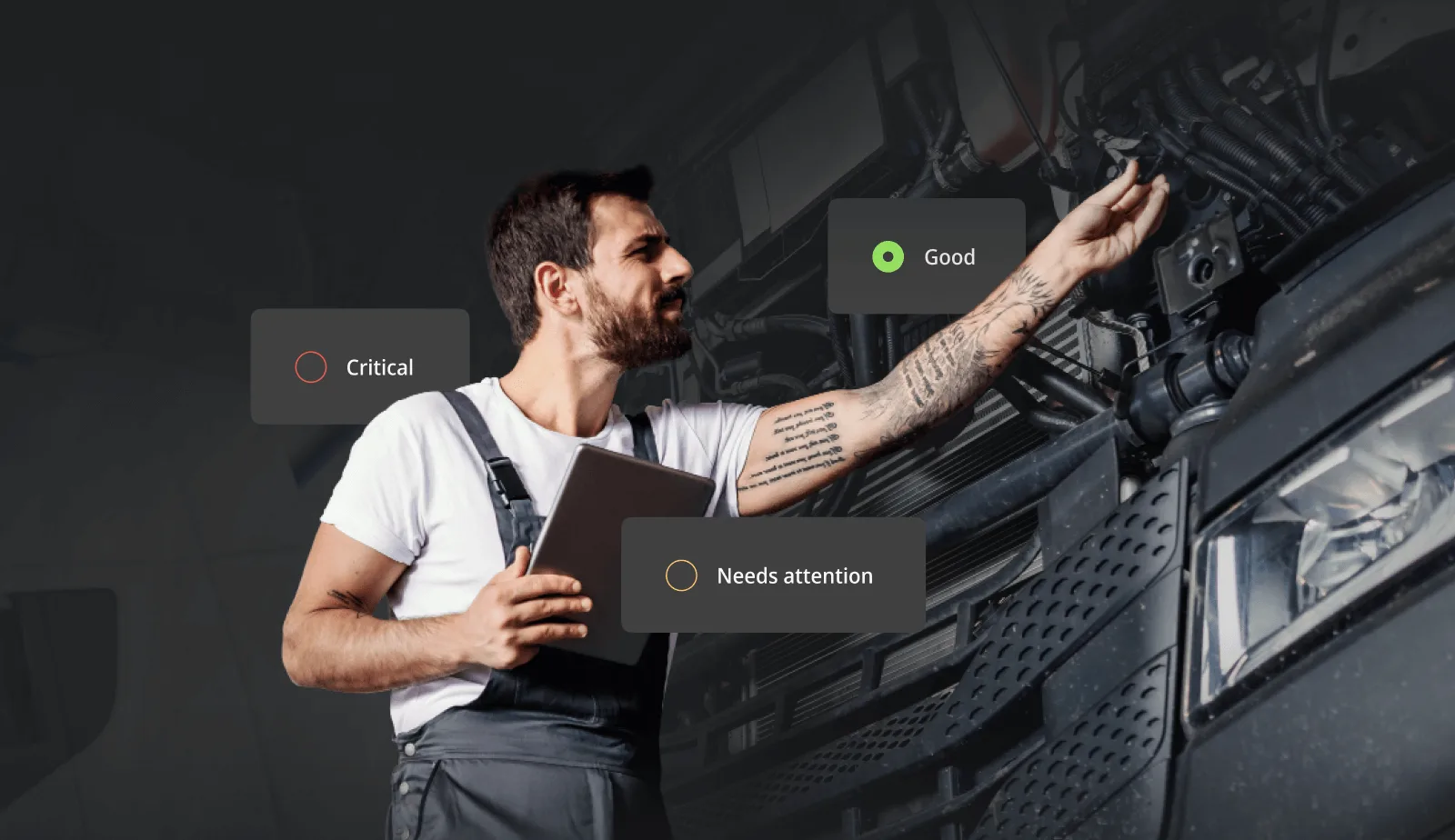
Maintenance scheduling and asset tracking keep vehicles roadworthy and extend service life. Managers receive alerts for inspections and part replacements before problems arise.

Driver performance data reveals speeding, harsh braking, and idle time. This feature allows fleet operators to raise safety standards and lower operational risks.
Let’s talk about your challenges.
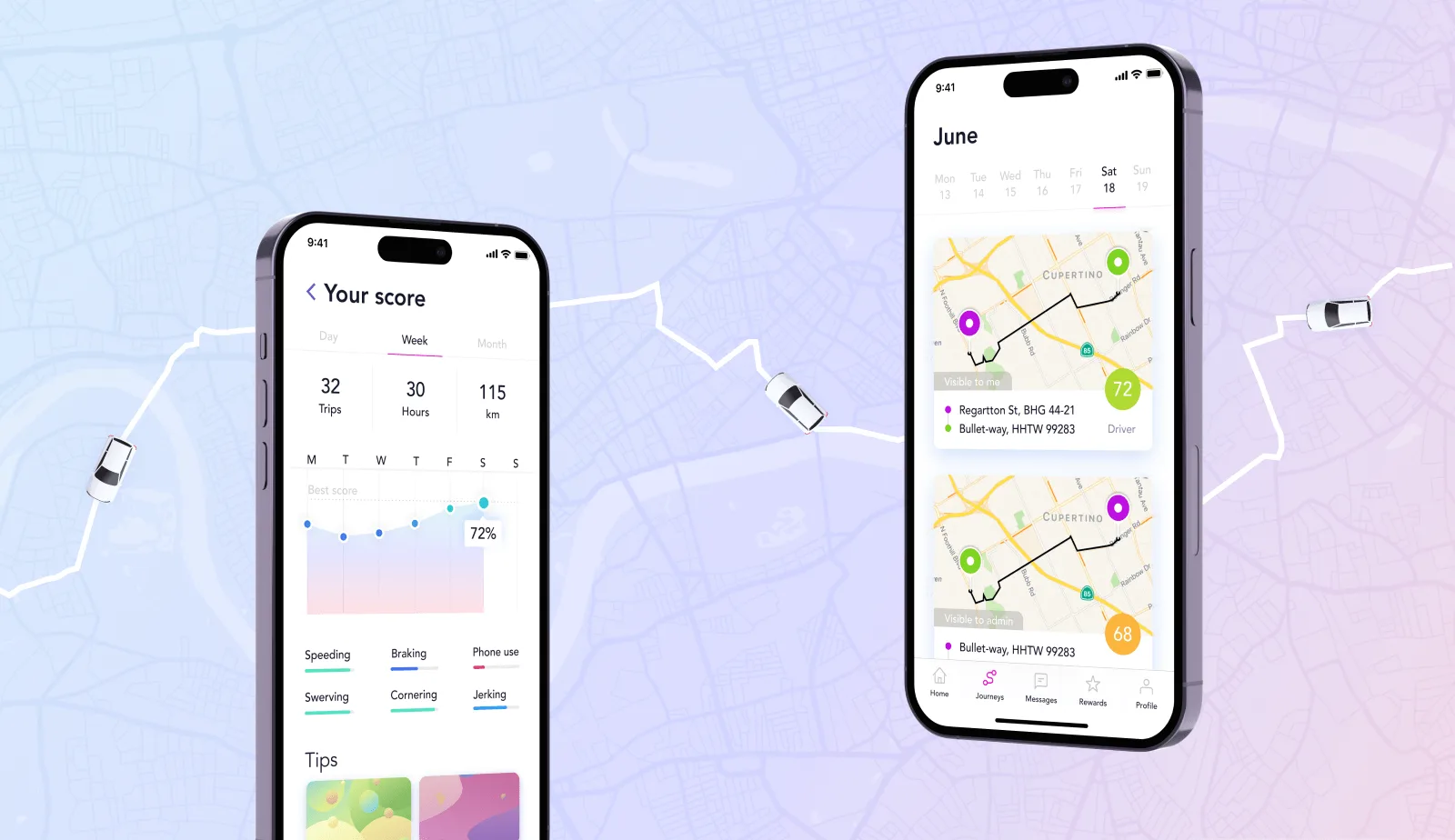

We start with an analysis of your operational workflows and find gaps in your current system. Our team then identifies core use cases and starts building a practical delivery roadmap.
Our designers visualise interfaces around the actual tasks of drivers and dispatchers. Every screen prioritises clear data presentation and easy navigation across devices.
Bamboo Apps’ fleet management app developers then create the application in stages, adding features one by one. You stay involved through regular demos and feedback sessions.
Our QA specialists check the app’s performance and integrations, as well as unusual cases across different devices and environments. Every release passes strict validation before we move it forward.
Finally, we manage the deployment and monitor system stability after release. As your fleet grows, Bamboo Apps provides ongoing support with updates and new features.

Over the years, Bamboo Apps has worked with OEMs and gained their trust. We have collaborated with Jaguar Land Rover, Škoda Auto, and Mitsubishi Electric. Experience with global companies helps us take on complex fleet platforms with confidence and discipline.

Our team builds connectivity that works. We connect drivers and back-office operations in real time – and work daily with telematics and cloud infrastructure. As a result, you get a product that moves data across your entire fleet.

Fleets grow quickly, and our goal is to deliver solutions that can grow with them. Bamboo Apps designs systems that handle rising data volumes, new vehicle types, expanding geographies, and other factors.

We help you choose the right technologies based on your goals, not industry hype. Our engineers maintain code quality and long-term stability. You always know who stands behind each technical decision.

As a fleet management app development company with years of experience, Bamboo Apps supports its clients at every stage of development – and beyond. This means your team receives ongoing support to keep the platform reliable and ready for change.
Just like any other service, custom fleet management software development comes with its own set of challenges. The major ones we can highlight are the following:
Fleet management software delivers benefits for any sector that depends on vehicles. Each industry draws different values – it mainly depends on how its fleet supports business strategies.
For example, logistics and delivery providers gain better control over routes and fuel use. Dispatchers track every vehicle in real time and keep customers informed without extra manual work.
Public transportation companies improve schedule reliability and passenger safety. Real-time data allows operators to respond to traffic conditions and reduce service disruptions.
Corporate fleets achieve visibility into driver habits and vehicle health. This helps them reduce fuel expenses and extend vehicle lifespan, as well as maintain compliance with internal policies or regulations.
Challenges can arise from data migration or hardware compatibility. Legacy systems frequently store inconsistent data, and it slows down setup. At the same time, different vehicle types and regions can require extra configuration. Teams also need time to adapt processes and train staff.
An experienced fleet app development agency like Bamboo Apps knows how to navigate these challenges at every stage. We offer early prototypes and phased delivery, so your teams can use the system sooner. In addition, continuous feedback keeps the project on course and prevents costly rework.
A typical fleet management system brings together four core components:
Fleet software usually connects to a few common categories of tools.
Telematics and GPS providers pull real-time vehicle data into the platform. Integration with hardware vendors automates tracking, so no manual entry is needed.
ERP systems like SAP ERP or Oracle NetSuite let finance, procurement, and operations teams manage fleet costs and resource allocation with the rest of the business.
Fuel card and expense platforms such as WEX or Fleetcor feed fuel spend into the system and flag irregular transactions.
Maintenance and service systems sync to track service history and schedule repairs.
HR and driver management systems connect driver records and compliance data to keep information consistent across teams.
Mapping and routing services like Google Maps Platform provide route planning and geofencing.
IoT platforms collect data from vehicle sensors for teams to monitor critical parameters.
Off-the-shelf platforms rarely fit your actual fleet operations, because internal workflows differ from one business to another. A custom fleet app, at the same time, reflects your specifics rather than forces your team to adapt to software logic.
Costs of fleet app development services depend on many factors, such as scope and integration needs.
As a rough example, a basic system with GPS tracking and reporting typically costs between $40,000 and $70,000.
More advanced platforms – with route planning, telematics, real-time analytics, and admin dashboards – fall between $80,000 and $150,000+.
Projects with custom hardware integration or AI-driven analytics will cost more.
Entrust your system to vehicle management software development professionals.

